
What to establish first
Assign each destination room a short, readable label and write the same label on at least two sides of each box.
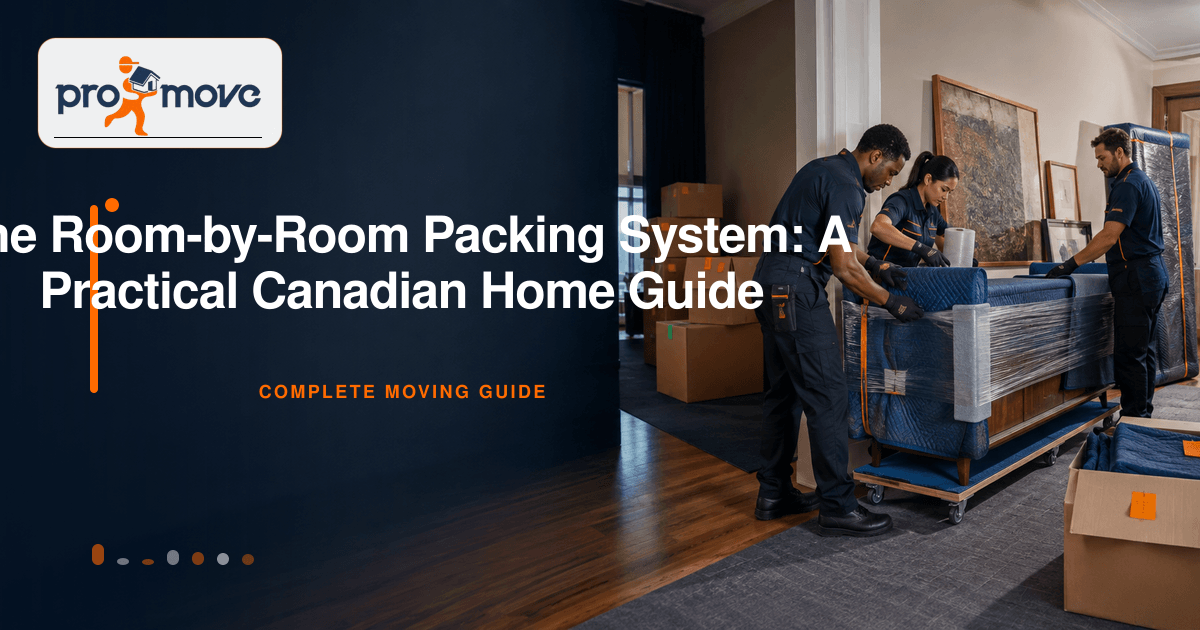
Packing Guides · Complete guide
A room-by-room system should make each carton easy to identify and unload once. Use destination labels, a consistent numbering method and a separate essential-items list; prioritise fragile or heavy pieces according to their handling needs.
Tell us about your move in three short steps. ProMove will review the details and contact you about a tailored estimate.
Topic-specific checklist
Choose simple consistent fields: room, box number, short contents category, handling needs and destination. Use a shared household list that does not disclose sensitive valuables in public labels. An identifier such as K-03 makes it easier to reconcile missing kitchen cartons than a sticker saying only 'miscellaneous'.
Assign each destination room a short, readable label and write the same label on at least two sides of each box.
Pack small dense items separately from light bulky items and keep fragile pieces cushioned and stable.
Maintain a concise inventory or numbered-box register so a missing carton can be identified at delivery.
Pack a personal essentials bag that does not enter the truck, and use an unpacking priority for the first 48 hours.
Planning overview
Choose simple consistent fields: room, box number, short contents category, handling needs and destination. Use a shared household list that does not disclose sensitive valuables in public labels. An identifier such as K-03 makes it easier to reconcile missing kitchen cartons than a sticker saying only 'miscellaneous'.
Direct answer
A room-by-room system should make each carton easy to identify and unload once. Use destination labels, a consistent numbering method and a separate essential-items list; prioritise fragile or heavy pieces according to their handling needs.
Start with seasonal items and rarely used belongings, then move to books and decor, and finish with the kitchen, bedrooms and daily essentials. Set aside personally carried documents, medication and chargers. Complete one practical group before shifting to another so that unfinished packing does not spread loose items through every room.
Action sequence
Choose simple room names for the new property before anyone begins labelling cartons.
Separate dense, fragile, seasonal and daily-use items and choose suitable carton sizes.
Add a box number, destination and short contents category to the label and keep a master list on your phone or paper.
Carry medicines, identity documents, chargers and immediate-use items separately from the main load.
Practical decision notes
Choose simple consistent fields: room, box number, short contents category, handling needs and destination. Use a shared household list that does not disclose sensitive valuables in public labels. An identifier such as K-03 makes it easier to reconcile missing kitchen cartons than a sticker saying only 'miscellaneous'.
Start with seasonal items and rarely used belongings, then move to books and decor, and finish with the kitchen, bedrooms and daily essentials. Set aside personally carried documents, medication and chargers. Complete one practical group before shifting to another so that unfinished packing does not spread loose items through every room.
Use manageable small cartons for books and dense pieces, suitable dividers for glass, and larger cartons for lightweight bulky contents. Fill gaps to reduce movement and do not rely on a single 'fragile' label to protect an object. Test that each box can be carried safely through the real route.
Give each carton a destination room and a priority code if the first night depends on it. Keep an inventory copy separate from the truck and ask the team which placement instructions it will follow. At delivery, check high-priority and delicate cartons before the packing materials are discarded.
Quality check
Labelling every box only by its origin room. Use manageable small cartons for books and dense pieces, suitable dividers for glass, and larger cartons for lightweight bulky contents. Fill gaps to reduce movement and do not rely on a single 'fragile' label to protect an object. Test that each box can be carried safely through the real route.
Moving quote
The estimate should reflect the actual job and its verified limitations. Start with seasonal items and rarely used belongings, then move to books and decor, and finish with the kitchen, bedrooms and daily essentials. Set aside personally carried documents, medication and chargers. Complete one practical group before shifting to another so that unfinished packing does not spread loose items through every room. Send ProMove Ottawa both addresses, preferred date, complete inventory and any building restrictions; ask the team to confirm which work is suitable, included, excluded and available before booking.
Request a no-obligation moving estimate once those details are ready.
Research record
The references below identify relevant services, official instructions or additional background. Confirm time-sensitive obligations and service rules directly with their current authority. Give each carton a destination room and a priority code if the first night depends on it. Keep an inventory copy separate from the truck and ask the team which placement instructions it will follow. At delivery, check high-priority and delicate cartons before the packing materials are discarded.
Free moving quote
The estimate should reflect the actual job and its verified limitations. Start with seasonal items and rarely used belongings, then move to books and decor, and finish with the kitchen, bedrooms and daily essentials. Set aside personally carried documents, medication and chargers. Complete one practical group before shifting to another so that unfinished packing does not spread loose items through every room. Send ProMove Ottawa both addresses, preferred date, complete inventory and any building restrictions; ask the team to confirm which work is suitable, included, excluded and available before booking.
Useful answers
Short answers tied to the actual task and information to verify.
Choose simple consistent fields: room, box number, short contents category, handling needs and destination. Use a shared household list that does not disclose sensitive valuables in public labels. Choose simple room names for the new property before anyone begins labelling cartons.
Start with seasonal items and rarely used belongings, then move to books and decor, and finish with the kitchen, bedrooms and daily essentials. Set aside personally carried documents, medication and chargers. Check the relevant conditions before accepting the planned arrangement.
Use manageable small cartons for books and dense pieces, suitable dividers for glass, and larger cartons for lightweight bulky contents. Fill gaps to reduce movement and do not rely on a single 'fragile' label to protect an object. Clarify who has authority to approve a changed approach.
Give each carton a destination room and a priority code if the first night depends on it. Keep an inventory copy separate from the truck and ask the team which placement instructions it will follow. Keep the confirmation with the relevant work record.
Choose simple room names for the new property before anyone begins labelling cartons. Choose simple consistent fields: room, box number, short contents category, handling needs and destination.
Separate dense, fragile, seasonal and daily-use items and choose suitable carton sizes. Start with seasonal items and rarely used belongings, then move to books and decor, and finish with the kitchen, bedrooms and daily essentials.
Add a box number, destination and short contents category to the label and keep a master list on your phone or paper. Use manageable small cartons for books and dense pieces, suitable dividers for glass, and larger cartons for lightweight bulky contents. Confirm which person will take the next action and when.
Carry medicines, identity documents, chargers and immediate-use items separately from the main load. Give each carton a destination room and a priority code if the first night depends on it.
Labelling every box only by its origin room. Start with seasonal items and rarely used belongings, then move to books and decor, and finish with the kitchen, bedrooms and daily essentials. Set aside personally carried documents, medication and chargers.
Mixing heavy books with fragile glass inside a large overloaded carton. Use manageable small cartons for books and dense pieces, suitable dividers for glass, and larger cartons for lightweight bulky contents. Fill gaps to reduce movement and do not rely on a single 'fragile' label to protect an object.
Choose simple consistent fields: room, box number, short contents category, handling needs and destination. Separate dense, fragile, seasonal and daily-use items and choose suitable carton sizes. Keep any sensitive evidence in a private record.
Give each carton a destination room and a priority code if the first night depends on it. Keep an inventory copy separate from the truck and ask the team which placement instructions it will follow. Carry medicines, identity documents, chargers and immediate-use items separately from the main load.
Not automatically. Use manageable small cartons for books and dense pieces, suitable dividers for glass, and larger cartons for lightweight bulky contents. Fill gaps to reduce movement and do not rely on a single 'fragile' label to protect an object. Confirm any new physical moving tasks, stops, access requirements or price changes directly with the moving provider before proceeding.
A room-by-room system should make each carton easy to identify and unload once. Choose simple room names for the new property before anyone begins labelling cartons. Choose simple consistent fields: room, box number, short contents category, handling needs and destination.
Labelling every box only by its origin room. Use manageable small cartons for books and dense pieces, suitable dividers for glass, and larger cartons for lightweight bulky contents. Separate dense, fragile, seasonal and daily-use items and choose suitable carton sizes.
Use manageable small cartons for books and dense pieces, suitable dividers for glass, and larger cartons for lightweight bulky contents. Fill gaps to reduce movement and do not rely on a single 'fragile' label to protect an object. Add a box number, destination and short contents category to the label and keep a master list on your phone or paper.
Start with seasonal items and rarely used belongings, then move to books and decor, and finish with the kitchen, bedrooms and daily essentials. Set aside personally carried documents, medication and chargers. Confirm the responsible party for each approval, handover or technical requirement instead of treating one provider as accountable for every task.
Choose simple consistent fields: room, box number, short contents category, handling needs and destination. Use manageable small cartons for books and dense pieces, suitable dividers for glass, and larger cartons for lightweight bulky contents. Check the actual item, property or service circumstances before marking a step completed.
Give each carton a destination room and a priority code if the first night depends on it. Confirm current government, manufacturer, provider or property rules with the responsible source when they affect the decision.
The estimate should reflect the actual job and its verified limitations. Start with seasonal items and rarely used belongings, then move to books and decor, and finish with the kitchen, bedrooms and daily essentials. Set aside personally carried documents, medication and chargers. Complete one practical group before shifting to another so that unfinished packing does not spread loose items through every room. Send ProMove Ottawa both addresses, preferred date, complete inventory and any building restrictions; ask the team to confirm which work is suitable, included, excluded and available before booking.
Continue planning
Related moving advice
These resources cover the next planning decisions connected to this topic.

Plain language guidance for moving supplies calculator, including preparation, timing, access, records, common problems and practical next steps for an Ottawa move.
Read article
Plain language guidance for moving box sizes, including preparation, timing, access, records, common problems and practical next steps for an Ottawa move.
Read article
Plain language guidance for when to start packing for moving, including preparation, timing, access, records, common problems and practical next steps for an Ottawa move.
Read article