
Describe the property
A house or townhouse move in Hunt Club, with room-by-room packing and driveway or curb access confirmed in advance. Record the number of rooms, floors, large items and any shared-building requirements.
South and central Ottawa · Ontario
Hunt Club is a south-Ottawa community north of the airport and east of the Rideau River, with established residential pockets, varied housing and important east-west road connections. A house inventory may extend to a basement, garage and yard; a townhouse can concentrate work on stairs; an apartment move may depend on elevator and entry reservations. Name the precise Hunt Club sector and property type instead of relying on the broad community label. For an accurate Hunt Club quote, disclose the actual origin, destination, property access and inventory.
Tell us about your move in three short steps. ProMove will review the details and contact you about a tailored estimate.
Before you request a quote
Hunt Club access ranges from private drives to shared complexes and multi-unit entrances. Confirm internal-road and visitor-space use with the property manager before assigning a truck position. A move within or beyond Hunt Club requires planning for both properties, not a blanket assumption about access or parking.
A house or townhouse move in Hunt Club, with room-by-room packing and driveway or curb access confirmed in advance. Record the number of rooms, floors, large items and any shared-building requirements.
Customers should confirm where the truck may stand, who controls the space and how far the crew will carry. Prepare family placement decisions early for a retirement or supported-living transition. For retirement or supported living environments, family decisions, property procedures and room placement should be settled in advance. Record the legal vehicle standing position and any access reservation for each address.
A move within Hunt Club involving family furniture, appliances and labelled boxes assigned to destination rooms. Confirm the booking window at both addresses.
Winter weather can leave compacted snow at shared parking edges and ice on shaded Hunt Club walks. Spring thaw may affect low or landscaped side routes, while autumn leaves can make steps slippery. Anchor commercial timing to authorized receiving hours, then check east-west route conditions near departure. Recheck moving-day conditions and confirm a safe carrying route.
Traffic and construction fluctuate, so the plan should check conditions near departure and include margin without asserting permanent delay. Build a room-by-room inventory for the Hunt Club move and flag heavy, fragile, high-value or unusually shaped items for review. Confirm internal-road and visitor-space use with the property manager before assigning a truck position. Provide photographs of significant access points and disclose special items or additional stops when requesting a written quote.
Request a tailored moving quoteLocal reference: Check current municipal or planning information. Always verify current restrictions with the relevant authority.
Moving in Hunt Club
Hunt Club is a south-Ottawa community north of the airport and east of the Rideau River, with established residential pockets, varied housing and important east-west road connections. The name can refer to several related sectors, so customers should provide the exact neighbourhood and civic address rather than assuming one uniform property pattern. Moves may involve detached or semi-detached homes, townhouses, apartment buildings, retirement settings or offices, and can connect with Riverside Park, South Keys, Alta Vista or communities farther south. Airport proximity does not automatically create a special moving restriction at a private address; any site-specific rule must come from the property. Planning should concentrate on the inventory, approved access, carrying distance and realistic route. Basements, shared parking and multi-unit procedures deserve early confirmation.
Hunt Club’s residential mix includes single homes, townhouses and apartments from different development periods, with some properties arranged around shared roads or internal parking. A house inventory may extend to a basement, garage and yard; a townhouse can concentrate work on stairs; an apartment move may depend on elevator and entry reservations. Customers should list storage areas and large pieces, then measure questionable furniture against stair turns. For retirement or supported living environments, family decisions, property procedures and room placement should be settled in advance. Commercial or airport-adjacent premises need their own receiving instructions, but planners should not infer secure-site requirements where the property has not supplied them.

Describe both addresses independently: a house may involve a driveway and basement stairs, while an apartment or shared complex may have managed entrances or an elevator booking. List the large items and storage areas at each end.
Confirm the approved vehicle position and walking distance, particularly on shared roads or internal lanes. Identify the person who can provide entry and the available moving window before requesting a final estimate.
Review local moving servicesTypical local scenarios
The property and service details matter more than the neighbourhood label alone.
A house or townhouse move in Hunt Club, with room-by-room packing and driveway or curb access confirmed in advance.
An apartment or condominium move in Hunt Club, if the property uses shared corridors, stairs, elevators or scheduled loading access.
A move within Hunt Club involving family furniture, appliances and labelled boxes assigned to destination rooms.
A move into or out of Hunt Club where temporary storage or phased delivery may help if possession dates do not align.
Access and parking
Hunt Club access ranges from private drives to shared complexes and multi-unit entrances. Customers should confirm where the truck may stand, who controls the space and how far the crew will carry. Visitor stalls, fire routes and internal lanes must not be treated as general loading areas without property permission. On a public street, read current signs and check any relevant City process. Document exterior steps, garage and side doors, building fobs and elevator dimensions. Where a property lies near a busy commercial or transportation facility, use the specified service entrance and on-site contact rather than approaching through a public entrance on moving day.
Season and route
Hunt Club Road is an important east-west corridor, but a moving route may also involve Riverside Drive, the Airport Parkway, Bank Street or other local connections. Traffic and construction fluctuate, so the plan should check conditions near departure and include margin without asserting permanent delay. Moves crossing the Rideau River or heading downtown should be sequenced around keys and destination access. A local apartment move may devote more time to elevators than travel. If a business or institutional move has approved receiving hours, those hours should anchor the schedule, with household-style assumptions set aside in favour of the site’s current instructions.
Winter weather can leave compacted snow at shared parking edges and ice on shaded Hunt Club walks. Customers should clear and treat the entire authorized carrying path, not only a front step, and monitor City parking-ban notices if public street space is planned. Spring thaw may affect low or landscaped side routes, while autumn leaves can make steps slippery. Summer heat and airport-area exposure call for water and careful handling of sensitive belongings. Any alternative entrance used for weather reasons still needs property approval and safe clearance.
Preparation checklist
Confirm the origin, destination, move date, access conditions and preferred contact person for every Hunt Club stop. Commercial or airport-adjacent premises need their own receiving instructions, but planners should not infer secure-site requirements where the property has not supplied them. Prepare family placement decisions early for a retirement or supported-living transition. List bulky, fragile and outdoor or secondary-storage items separately to avoid an incomplete estimate.
Moves crossing the Rideau River or heading downtown should be sequenced around keys and destination access. Label boxes by destination room and handling priority so unloading at the Hunt Club property follows a clear placement plan. Name the precise Hunt Club sector and property type instead of relying on the broad community label. Confirm the contact responsible for any last-minute change at each address.
Keep keys, identification, medication, essential documents, chargers and first-night necessities separate from the moving load. Customers should list storage areas and large pieces, then measure questionable furniture against stair turns. Anchor commercial timing to authorized receiving hours, then check east-west route conditions near departure. Use the destination's actual room and floor layout, not a generic neighbourhood assumption.
Keep keys, identification, medication, essential documents, chargers and first-night necessities separate from the moving load.
Twelve focused services
Efficient moves within Ottawa and approved nearby communities.
View in Hunt ClubCoordinated relocations beyond Ottawa with clear planning and delivery steps.
View in Hunt ClubRoom-by-room moving support for houses of different sizes and access conditions.
View in Hunt ClubResponsive planning for urgent and short-notice moving situations.
View in Hunt ClubOrganized office moves designed around continuity, access and equipment.
View in Hunt ClubFull or partial packing help using an organized, room-by-room approach.
View in Hunt ClubMoving labour for loading, unloading and on-site rearrangement.
View in Hunt ClubCareful handling for individual pieces and full-room furniture moves.
View in Hunt ClubMoving plans for upright and grand pianos based on access at both properties.
View in Hunt ClubCoordinated moves into, out of or between suitable storage arrangements.
View in Hunt ClubPatient, step-by-step moving support for seniors and their families.
View in Hunt ClubPlanning and moving help for a more manageable home and inventory.
View in Hunt ClubMoving-day context
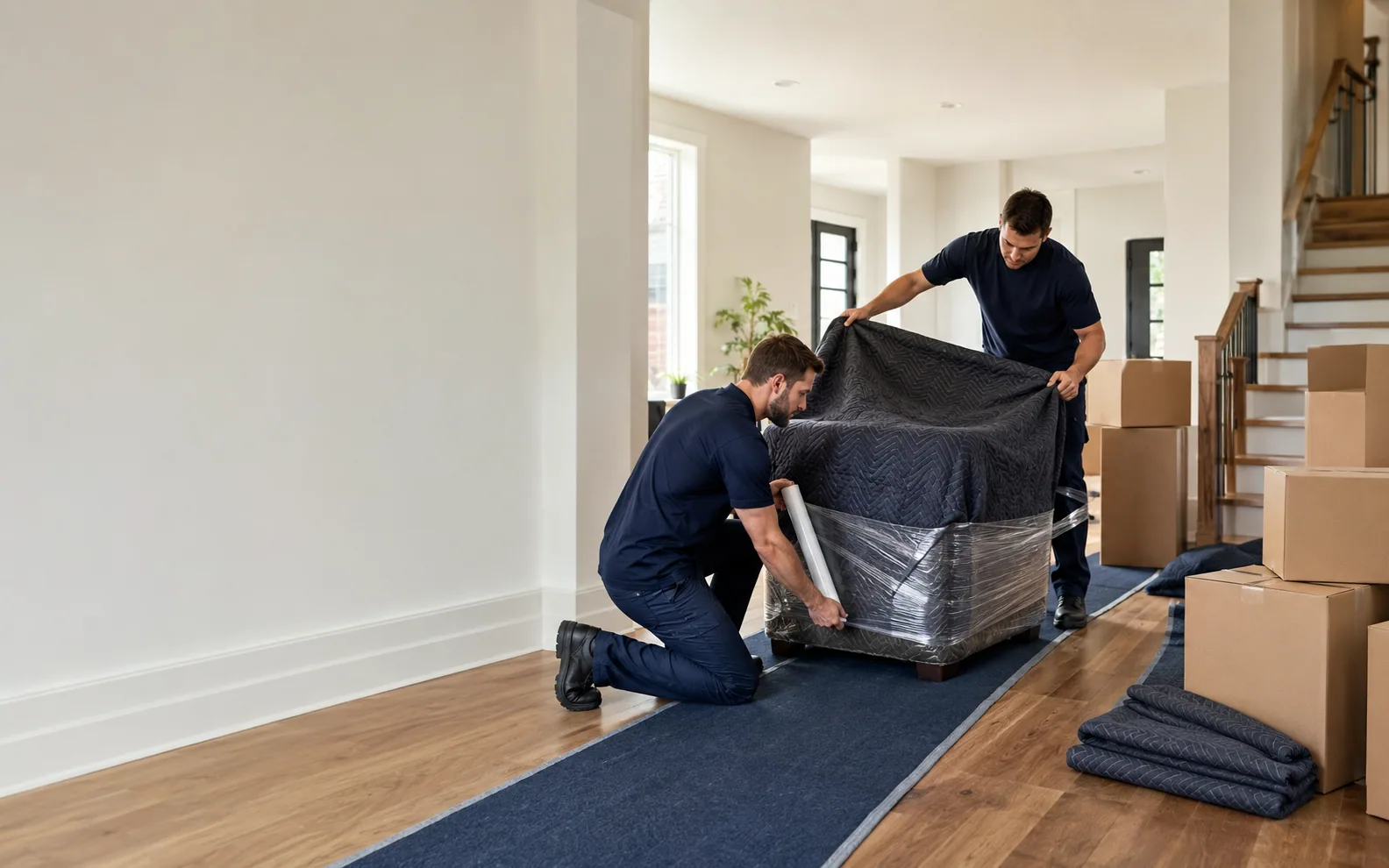
Relevant visuals break up detailed planning guidance and show how preparation, protection and access fit together.

Free moving quote
Airport proximity does not automatically create a special moving restriction at a private address; any site-specific rule must come from the property. Visitor stalls, fire routes and internal lanes must not be treated as general loading areas without property permission. Confirm internal-road and visitor-space use with the property manager before assigning a truck position. These are practical checks for a requested move in Hunt Club; address-level requirements still need confirmation.
Content ownership and review
Helpful answers
Direct answers first, followed by at least 50 words of practical planning detail.
Hunt Club is a south-Ottawa community north of the airport and east of the Rideau River, with established residential pockets, varied housing and important east-west road connections. Hunt Club’s residential mix includes single homes, townhouses and apartments from different development periods, with some properties arranged around shared roads or internal parking. Name the precise Hunt Club sector and property type instead of relying on the broad community label. The exact origin and destination—not the neighbourhood label—should determine the crew access, inventory and quote assumptions.
A house inventory may extend to a basement, garage and yard; a townhouse can concentrate work on stairs; an apartment move may depend on elevator and entry reservations. Confirm internal-road and visitor-space use with the property manager before assigning a truck position. A house or townhouse move in Hunt Club, with room-by-room packing and driveway or curb access confirmed in advance. Share the actual building type, floor, room count, special items and usable entrance before relying on an estimate.
Hunt Club access ranges from private drives to shared complexes and multi-unit entrances. Do not infer airport or secure-site restrictions; obtain written access instructions from the specific premises. Confirm whether driveway, curbside or designated loading access is available at each Hunt Club address. Confirm a lawful standing position and measure the carry from that point to the entrance rather than assuming nearby parking can be reserved.
Customers should list storage areas and large pieces, then measure questionable furniture against stair turns. Customers should confirm where the truck may stand, who controls the space and how far the crew will carry. Prepare family placement decisions early for a retirement or supported-living transition. Photos and measurements of stair turns, gate widths, landings and door clearances help determine whether large furniture can be handled safely.
For retirement or supported living environments, family decisions, property procedures and room placement should be settled in advance. Visitor stalls, fire routes and internal lanes must not be treated as general loading areas without property permission. An apartment or condominium move in Hunt Club, if the property uses shared corridors, stairs, elevators or scheduled loading access. Ask whether a loading bay, elevator, move-in window, floor protection or insurance documentation is required at that specific property.
Commercial or airport-adjacent premises need their own receiving instructions, but planners should not infer secure-site requirements where the property has not supplied them. Anchor commercial timing to authorized receiving hours, then check east-west route conditions near departure. A move within Hunt Club involving family furniture, appliances and labelled boxes assigned to destination rooms. Inventory basements, garages, additions and outdoor storage where present; confirm driveway access separately from stair and interior-route suitability.
Hunt Club Road is an important east-west corridor, but a moving route may also involve Riverside Drive, the Airport Parkway, Bank Street or other local connections. Traffic and construction fluctuate, so the plan should check conditions near departure and include margin without asserting permanent delay. Confirm internal-road and visitor-space use with the property manager before assigning a truck position. Confirm the exact pickup and destination before estimating driving time; live restrictions and the truck approach can change the sequence.
Moves crossing the Rideau River or heading downtown should be sequenced around keys and destination access. Nearby areas discussed for context include South Keys, Greenboro, Blossom Park. The name can refer to several related sectors, so customers should provide the exact neighbourhood and civic address rather than assuming one uniform property pattern. Confirm both destinations' loading and receiving rules; proximity alone does not establish a fixed travel time or service availability.
Winter weather can leave compacted snow at shared parking edges and ice on shaded Hunt Club walks. Customers should clear and treat the entire authorized carrying path, not only a front step, and monitor City parking-ban notices if public street space is planned. For a winter move in Hunt Club, keep entrances, steps and the working path cleared and monitor the forecast close to moving day. Reconfirm the carrying route shortly before loading and keep weather-sensitive or essential items in the customer's direct control.
Spring thaw may affect low or landscaped side routes, while autumn leaves can make steps slippery. During wet or thaw conditions in Hunt Club, plan floor protection and keep cartons away from exposed ground while loading. On a public street, read current signs and check any relevant City process. Clear and assess private access routes; check any official parking restrictions for the actual date instead of assuming a familiar curb position remains lawful.
Summer heat and airport-area exposure call for water and careful handling of sensitive belongings. Document exterior steps, garage and side doors, building fobs and elevator dimensions. Name the precise Hunt Club sector and property type instead of relying on the broad community label. Send fresh photos if the driveway, walking surface or vehicle position differs from the dry-weather survey, and agree on an alternate safe approach if needed.
A local apartment move may devote more time to elevators than travel. Moves may involve detached or semi-detached homes, townhouses, apartment buildings, retirement settings or offices, and can connect with Riverside Park, South Keys, Alta Vista or communities farther south. Prepare family placement decisions early for a retirement or supported-living transition. Review current official traffic information and confirm building booking times; these references are planning considerations, not claims that an event will affect every address.
Build a room-by-room inventory for the Hunt Club move and flag heavy, fragile, high-value or unusually shaped items for review. Confirm the origin, destination, move date, access conditions and preferred contact person for every Hunt Club stop. Hunt Club’s residential mix includes single homes, townhouses and apartments from different development periods, with some properties arranged around shared roads or internal parking. Record large furniture measurements, fragile goods and items in secondary storage, and disclose anything that requires separate specialist work.
Where a property lies near a busy commercial or transportation facility, use the specified service entrance and on-site contact rather than approaching through a public entrance on moving day. A house inventory may extend to a basement, garage and yard; a townhouse can concentrate work on stairs; an apartment move may depend on elevator and entry reservations. Confirm internal-road and visitor-space use with the property manager before assigning a truck position. A practical quote depends on furniture size, stair turns, floor protection, truck carrying distance and a confirmed method—not an unsupported blanket promise.
If a business or institutional move has approved receiving hours, those hours should anchor the schedule, with household-style assumptions set aside in favour of the site’s current instructions. A move into or out of Hunt Club where temporary storage or phased delivery may help if possession dates do not align. Do not infer airport or secure-site restrictions; obtain written access instructions from the specific premises. List each stop and the items delivered there. Storage, approved disposal and any specialist services must be expressly included in the written scope rather than assumed.
Visitor stalls, fire routes and internal lanes must not be treated as general loading areas without property permission. Check applicable property, condominium, landlord or municipal parking requirements for Hunt Club; arrange permission only where required. Anchor commercial timing to authorized receiving hours, then check east-west route conditions near departure. Follow the actual building's instructions and check current requirements with the relevant municipality where public parking or right-of-way use is involved. No neighbourhood guide grants a parking permit.
Hunt Club Road is an important east-west corridor, but a moving route may also involve Riverside Drive, the Airport Parkway, Bank Street or other local connections. Label boxes by destination room and handling priority so unloading at the Hunt Club property follows a clear placement plan. Customers should list storage areas and large pieces, then measure questionable furniture against stair turns. Provide a usable collection window, destination access contact and any elevator reservations; do not treat a quotation request as a confirmed crew booking.
Hunt Club access ranges from private drives to shared complexes and multi-unit entrances. Name the precise Hunt Club sector and property type instead of relying on the broad community label. Any alternative entrance used for weather reasons still needs property approval and safe clearance. Inform the moving provider before loading starts. An alternative truck position, extended carry or revised handling plan may require re-assessment and written agreement.
Airport proximity does not automatically create a special moving restriction at a private address; any site-specific rule must come from the property. Moves crossing the Rideau River or heading downtown should be sequenced around keys and destination access. Prepare family placement decisions early for a retirement or supported-living transition. The location page includes sources for checking the underlying municipal or community context. For current restrictions, verify directly with the responsible authority and property manager.
Customers should list storage areas and large pieces, then measure questionable furniture against stair turns. Customers should confirm where the truck may stand, who controls the space and how far the crew will carry. Do not infer airport or secure-site restrictions; obtain written access instructions from the specific premises. Send both full addresses, your preferred date, item inventory, building instructions, photographs and any extra stops. Ask ProMove to confirm suitability, availability, exclusions and the written estimate.
Continue planning