
What to establish first
Measure furniture and doorway or stair clearances before selecting a carrying route; disassembly may be safer than forcing a turn.

Specialty Moving · Complete guide
A protected move considers both the item and the route through the property. Assess doorways, corners, stairs and finished floors before carrying large furniture, then choose wraps, pads and handling methods suitable for the surfaces involved.
Tell us about your move in three short steps. ProMove will review the details and contact you about a tailored estimate.
Topic-specific checklist
Measure the furniture and the tightest doorway, turn, landing and stair at both addresses. A sofa that fits into a room may still be impossible to carry safely through the approach. Confirm who can authorize removal of a door or disassembly; do not force a tight turn and damage both the furniture and building.
Measure furniture and doorway or stair clearances before selecting a carrying route; disassembly may be safer than forcing a turn.
Protect suitable furniture finishes with clean blankets or wraps, avoiding direct adhesive contact with delicate surfaces.
Use appropriate floor and corner protection approved for the property; keep exits and shared corridors clear.
Photograph pre-existing condition and agree how protection will be inspected and removed at the end of the move.
Planning overview
Measure the furniture and the tightest doorway, turn, landing and stair at both addresses. A sofa that fits into a room may still be impossible to carry safely through the approach. Confirm who can authorize removal of a door or disassembly; do not force a tight turn and damage both the furniture and building.
Direct answer
A protected move considers both the item and the route through the property. Assess doorways, corners, stairs and finished floors before carrying large furniture, then choose wraps, pads and handling methods suitable for the surfaces involved.
Clean blankets and suitable wrap can protect compatible furniture finishes, but some adhesives, moisture barriers and pressure points can damage delicate surfaces. Flooring protection must be stable, non-slip and suitable for the property. Check building rules for corridors and elevators before securing materials to shared surfaces.
Action sequence
Photograph vulnerable finishes, narrow turns and heavy furniture dimensions at both pickup and delivery.
Remove loose parts where appropriate, retain hardware in labelled bags and protect fragile surfaces without trapping damaging moisture.
Discuss floor and corner protection approved for the finish and keep escape routes and shared areas unobstructed.
Inspect furniture and the route with the crew and document any condition concern promptly.
Practical decision notes
Measure the furniture and the tightest doorway, turn, landing and stair at both addresses. A sofa that fits into a room may still be impossible to carry safely through the approach. Confirm who can authorize removal of a door or disassembly; do not force a tight turn and damage both the furniture and building.
Clean blankets and suitable wrap can protect compatible furniture finishes, but some adhesives, moisture barriers and pressure points can damage delicate surfaces. Flooring protection must be stable, non-slip and suitable for the property. Check building rules for corridors and elevators before securing materials to shared surfaces.
Photograph exposed corners, narrow hallways, thresholds, new floors and fixed cabinetry. Agree on the planned route, appropriate equipment and a clean staging space. Avoid obstructing fire exits or leaving pads and runners where residents could trip. A property manager may impose particular protection or booking rules.
Take a few dated photographs before carrying starts and inspect large pieces and key property surfaces when delivery is complete. Store hardware with disassembled items in labelled bags. If there is a new concern, separate it from pre-existing marks and follow the agreed procedure promptly, while relevant packaging and witnesses are available.
Quality check
Putting adhesive tape directly onto sensitive furniture finishes. Photograph exposed corners, narrow hallways, thresholds, new floors and fixed cabinetry. Agree on the planned route, appropriate equipment and a clean staging space. Avoid obstructing fire exits or leaving pads and runners where residents could trip. A property manager may impose particular protection or booking rules.
Moving quote
The estimate should reflect the actual job and its verified limitations. Clean blankets and suitable wrap can protect compatible furniture finishes, but some adhesives, moisture barriers and pressure points can damage delicate surfaces. Flooring protection must be stable, non-slip and suitable for the property. Check building rules for corridors and elevators before securing materials to shared surfaces. Send ProMove Ottawa both addresses, preferred date, complete inventory and any building restrictions; ask the team to confirm which work is suitable, included, excluded and available before booking.
Request a no-obligation moving estimate once those details are ready.
Research record
The references below identify relevant services, official instructions or additional background. Confirm time-sensitive obligations and service rules directly with their current authority. Take a few dated photographs before carrying starts and inspect large pieces and key property surfaces when delivery is complete. Store hardware with disassembled items in labelled bags. If there is a new concern, separate it from pre-existing marks and follow the agreed procedure promptly, while relevant packaging and witnesses are available.
Free moving quote
The estimate should reflect the actual job and its verified limitations. Clean blankets and suitable wrap can protect compatible furniture finishes, but some adhesives, moisture barriers and pressure points can damage delicate surfaces. Flooring protection must be stable, non-slip and suitable for the property. Check building rules for corridors and elevators before securing materials to shared surfaces. Send ProMove Ottawa both addresses, preferred date, complete inventory and any building restrictions; ask the team to confirm which work is suitable, included, excluded and available before booking.
Useful answers
Short answers tied to the actual task and information to verify.
Measure the furniture and the tightest doorway, turn, landing and stair at both addresses. A sofa that fits into a room may still be impossible to carry safely through the approach. Photograph vulnerable finishes, narrow turns and heavy furniture dimensions at both pickup and delivery.
Clean blankets and suitable wrap can protect compatible furniture finishes, but some adhesives, moisture barriers and pressure points can damage delicate surfaces. Flooring protection must be stable, non-slip and suitable for the property. Check the relevant conditions before accepting the planned arrangement.
Photograph exposed corners, narrow hallways, thresholds, new floors and fixed cabinetry. Agree on the planned route, appropriate equipment and a clean staging space. Clarify who has authority to approve a changed approach.
Take a few dated photographs before carrying starts and inspect large pieces and key property surfaces when delivery is complete. Store hardware with disassembled items in labelled bags. Keep the confirmation with the relevant work record.
Photograph vulnerable finishes, narrow turns and heavy furniture dimensions at both pickup and delivery. Measure the furniture and the tightest doorway, turn, landing and stair at both addresses.
Remove loose parts where appropriate, retain hardware in labelled bags and protect fragile surfaces without trapping damaging moisture. Clean blankets and suitable wrap can protect compatible furniture finishes, but some adhesives, moisture barriers and pressure points can damage delicate surfaces.
Discuss floor and corner protection approved for the finish and keep escape routes and shared areas unobstructed. Photograph exposed corners, narrow hallways, thresholds, new floors and fixed cabinetry. Confirm which person will take the next action and when.
Inspect furniture and the route with the crew and document any condition concern promptly. Take a few dated photographs before carrying starts and inspect large pieces and key property surfaces when delivery is complete.
Putting adhesive tape directly onto sensitive furniture finishes. Clean blankets and suitable wrap can protect compatible furniture finishes, but some adhesives, moisture barriers and pressure points can damage delicate surfaces. Flooring protection must be stable, non-slip and suitable for the property.
Trying to protect floors without checking whether a runner can slip. Photograph exposed corners, narrow hallways, thresholds, new floors and fixed cabinetry. Agree on the planned route, appropriate equipment and a clean staging space.
Measure the furniture and the tightest doorway, turn, landing and stair at both addresses. Remove loose parts where appropriate, retain hardware in labelled bags and protect fragile surfaces without trapping damaging moisture. Keep any sensitive evidence in a private record.
Take a few dated photographs before carrying starts and inspect large pieces and key property surfaces when delivery is complete. Store hardware with disassembled items in labelled bags. Inspect furniture and the route with the crew and document any condition concern promptly.
Not automatically. Photograph exposed corners, narrow hallways, thresholds, new floors and fixed cabinetry. Agree on the planned route, appropriate equipment and a clean staging space. Confirm any new physical moving tasks, stops, access requirements or price changes directly with the moving provider before proceeding.
A protected move considers both the item and the route through the property. Photograph vulnerable finishes, narrow turns and heavy furniture dimensions at both pickup and delivery. Measure the furniture and the tightest doorway, turn, landing and stair at both addresses.
Putting adhesive tape directly onto sensitive furniture finishes. Photograph exposed corners, narrow hallways, thresholds, new floors and fixed cabinetry. Remove loose parts where appropriate, retain hardware in labelled bags and protect fragile surfaces without trapping damaging moisture.
Photograph exposed corners, narrow hallways, thresholds, new floors and fixed cabinetry. Agree on the planned route, appropriate equipment and a clean staging space. Discuss floor and corner protection approved for the finish and keep escape routes and shared areas unobstructed.
Clean blankets and suitable wrap can protect compatible furniture finishes, but some adhesives, moisture barriers and pressure points can damage delicate surfaces. Flooring protection must be stable, non-slip and suitable for the property. Confirm the responsible party for each approval, handover or technical requirement instead of treating one provider as accountable for every task.
Measure the furniture and the tightest doorway, turn, landing and stair at both addresses. Photograph exposed corners, narrow hallways, thresholds, new floors and fixed cabinetry. Check the actual item, property or service circumstances before marking a step completed.
Take a few dated photographs before carrying starts and inspect large pieces and key property surfaces when delivery is complete. Confirm current government, manufacturer, provider or property rules with the responsible source when they affect the decision.
The estimate should reflect the actual job and its verified limitations. Clean blankets and suitable wrap can protect compatible furniture finishes, but some adhesives, moisture barriers and pressure points can damage delicate surfaces. Flooring protection must be stable, non-slip and suitable for the property. Check building rules for corridors and elevators before securing materials to shared surfaces. Send ProMove Ottawa both addresses, preferred date, complete inventory and any building restrictions; ask the team to confirm which work is suitable, included, excluded and available before booking.
Continue planning
Related moving advice
These resources cover the next planning decisions connected to this topic.

Plain language guidance for how to pack artwork for moving, including preparation, timing, access, records, common problems and practical next steps for an Ottawa move.
Read article
Plan an Ottawa furniture pickup or large-item delivery from seller handoff to final placement. This field-ready guide covers measurements, routes, elevators, parking, condition records, disassembly, protection, scheduling and the decisions that prevent a curbside surprise.
Read guide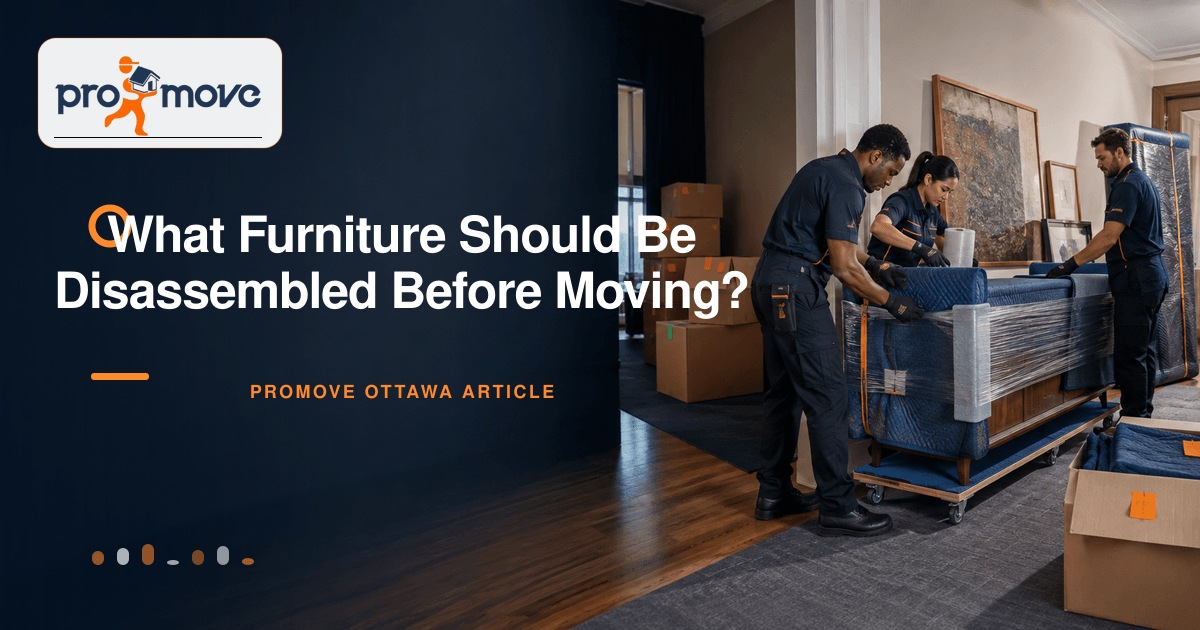
Decide which beds, tables, wardrobes, sofas and shelving units should come apart before an Ottawa move. This guide uses route measurements, manufacturer instructions, condition checks and hardware control to prevent unnecessary damage and unsafe improvisation.
Read article