
Origin scenario
A senior household choosing a smaller and simpler residence in the cross-river Ontario to Quebec area; the page should examine how a storage or secondary stop across the river changes the regional route.

Storage and transition · Aylmer
Connect downsizing requirements with Aylmer property access, the route, inventory, requested preparation and moving-day timing.
Scope, access and next steps
Planning and moving help for a more manageable home and inventory. Share both addresses, the preferred date and the work you need. Availability and item suitability must be confirmed before booking.
| Requested work | Households moving to a smaller or simpler space and needing a structured plan to compare available room with furniture, belongings and future priorities. |
|---|---|
| Quote inputs | Current household volume and sorting readiness; Packing and unpacking support; Storage or additional delivery destinations; Furniture disassembly and placement; Access conditions at the smaller home |
| Access to check | Destination furniture and storage capacity; Condo or apartment elevator rules; Space for carton staging and unpacking; Access for family pickups or separate deliveries |
| Confirmation | A form submission is an enquiry. Obtain explicit written confirmation of the scope and date before treating the move as booked. |
These are planning checks, not confirmation of permission at a particular property. Check the relevant authority or building manager for current requirements.
Why the service and location matter together
Aylmer is the western sector of Gatineau along the Ottawa River, combining the historic Vieux-Aylmer area with established suburban neighbourhoods and newer development farther from the old centre. Those settings create meaningfully different moves. Near the traditional core, older buildings, tighter street geometry and active commercial frontage may constrain vehicle placement. In suburban sections, driveways are more common, but garage inventory, multi-level homes and school-hour traffic can shape timing. A move between Aylmer and Ottawa is also an interprovincial relocation that depends on bridge choice and conditions beyond the immediate neighbourhood. Customers should provide the full street address and not rely on 'Aylmer' as a routing instruction. Building management, parking signs and elevator requirements need confirmation in advance. For an older property, measure stair turns and entrances; for a newer one, check construction, visitor parking and whether the road is fully accessible to the planned truck. A useful downsizing brief for the cross-river Ontario to Quebec area has to connect the inventory with the route and the available access window. These approved locations are in Quebec while ProMove’s Ottawa base is in Ontario, so the route crosses the provincial boundary and should be planned as a regional movement. For this intersection, destination measurements and daily-living priorities guide what moves, goes to family, enters storage or leaves the inventory, while destination room and storage dimensions should be compared with the retained inventory. The route and timing should allow for bridge traffic without promising one exact travel duration; accordingly, decisions need enough lead time for recipients, storage and removal arrangements without delaying the core move. Customers receive a verifiable plan rather than a promise built on gaps.
Vieux-Aylmer contains historic and older low-rise properties, while the wider sector includes detached homes, townhouses, apartments and condominiums of many periods. An older dwelling may have a narrow vestibule, steep stair or addition that breaks a direct furniture path. A condo may instead have adequate doors but a distant loading area, booked elevator and storage locker on another level. Newer family homes often add basement, garage and patio contents that bedroom counts overlook. Customers should identify the dwelling type, floor, storage location and property-management contact at both ends. French-language condominium or lease rules should be translated or summarized for the crew where necessary. No item should be assumed to fit until its complete interior-to-truck route has been measured. These approved locations are in Quebec while ProMove’s Ottawa base is in Ontario, so the route crosses the provincial boundary and should be planned as a regional movement. Within that mix, the smaller home must accommodate circulation, storage and essential furniture rather than merely fit each item individually. The route and timing should allow for bridge traffic without promising one exact travel duration, and condo, apartment or managed-residence procedures may affect the arrival plan. The walkthrough should pair this service priority: draw a practical destination layout before making final furniture decisions: with a location check: customers should confirm current property and municipal requirements instead of applying an Ottawa assumption.
Local moving scenarios
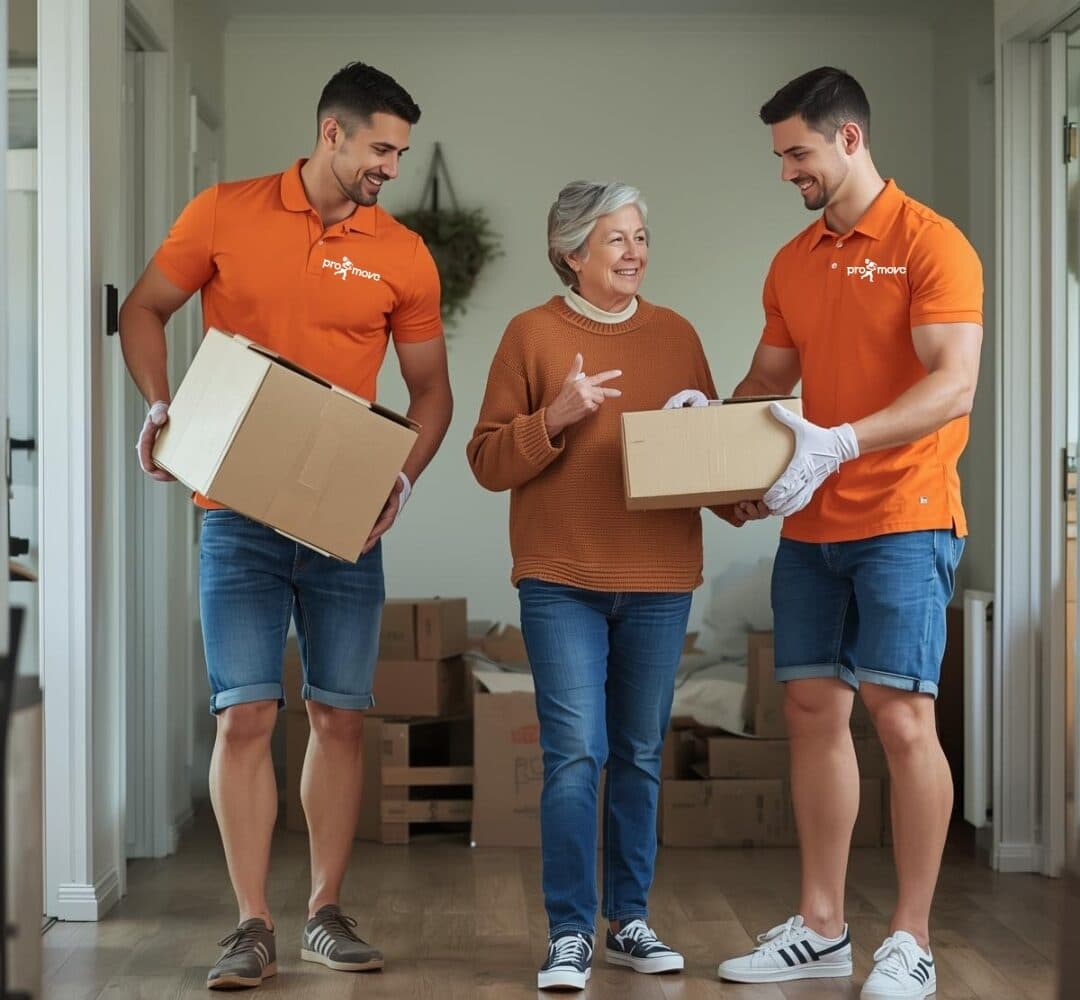
A senior household choosing a smaller and simpler residence in the cross-river Ontario to Quebec area; the page should examine how a storage or secondary stop across the river changes the regional route.
A customer reducing stored belongings before a long-distance relocation in the cross-river Ontario to Quebec area; the page should examine how a cross-river segment and separate property instructions on each side affect the sequence.
A household changing lifestyle after renovation or family transition in the cross-river Ontario to Quebec area; the page should examine whether a Quebec origin can align with the destination access window in Ottawa.
A family moving from a multi-bedroom house into a condo in the cross-river Ontario to Quebec area; the page should examine which provincial address details and property contacts must remain visible in the working plan.
Moving process
The sequence connects downsizing requirements with the two properties and route.
Measure destination rooms, storage and furniture access.
Create a realistic furniture layout before deciding what will move.
Sort one category or room at a time using consistent destination groups.
Arrange decisions for family transfers, storage and approved removal early.
Pack immediate-use items separately for the first days in the new home.
Sort one room or category at a time into consistent destination groups. For the cross-river Ontario to Quebec area, verify the province, postal information and contact details for every stop.
Arrange family transfers, storage and approved removal before moving day. For the cross-river Ontario to Quebec area, confirm current property and municipal requirements instead of applying an Ottawa assumption.
Sequence priority furniture and first-use cartons so the new space remains functional. For the cross-river Ontario to Quebec area, build reasonable travel flexibility around the cross-river segment.
Draw a practical destination layout before making final furniture decisions. For the cross-river Ontario to Quebec area, complete an inventory review before departure so exceptions are resolved at the correct address.
Location access
Aylmer's loading plan should distinguish private driveways from public curb space. In the old centre, the intended truck position may interact with signed parking, business entrances, pedestrian activity or narrow streets; in suburban areas, parked cars and snowbanks may still limit access. Customers should photograph current signs, curb conditions and building entrances, then verify any reservation process with the City or property manager. A loading zone is not automatically exclusive, and a resident permit is not a road-occupation permit. For apartment buildings, record the elevator dimensions, booking period and distance from the loading door. Keep bicycle routes, fire access and neighbours clear. If a newer street is under construction, obtain an updated access confirmation shortly before moving day.
Service access
Cost factors
Timing factors
Aylmer to Ottawa travel often focuses on the west-side river crossings, but the best bridge depends on the destination and real-time conditions. Queues can develop outside conventional rush-hour assumptions, so a fixed elevator window should include a meaningful contingency. A cross-river move may also need a secondary route if construction or an incident affects the preferred crossing. For moves within Gatineau, sector roads can still be busy as traffic channels toward bridges. Confirm the complete origin and destination addresses before assigning the route, and ensure the moving vehicle is suitable for all chosen roads. The dispatcher should check official traffic information near departure. Where possession timing is uncertain, avoid booking a crew to wait at a curb with limited legal stopping space. For downsizing in the cross-river Ontario to Quebec area, sorting readiness, multiple destinations, packing, furniture work and access at the smaller home influence labour. Regional travel and a cross-river route add vehicle time to the handling work at each property. The estimate should separate those travel assumptions from stairs, elevators, carrying distance and requested preparation, while the schedule retains reasonable traffic flexibility. Decisions need enough lead time for recipients, storage and removal arrangements without delaying the core move; property-specific loading and parking instructions need confirmation on both sides of the river. The estimate should separate confirmed facts from allowances and be revised if inventory or access changes.
Winter snow removal can change Aylmer parking availability with little resemblance to a summer site visit. Customers should verify Gatineau restrictions, move vehicles off the intended loading area and clear the path from building to truck. Older exterior stairs and shaded walks need ice treatment. Spring conditions along the Ottawa River may warrant checking official notices for specific low-lying properties, but river proximity alone should not be treated as proof of access risk. Summer construction and events in Vieux-Aylmer can affect streets and public parking. Heat-sensitive goods should remain under customer control. If weather changes the selected bridge or curb plan, update both the route and building booking before dispatch.
Protection plan
Service and location gallery
Relevant visuals break up detailed planning guidance and show how preparation, protection and access fit together.



Free moving quote
Share both addresses, the date, inventory, property types, access conditions, requested support and any special items. ProMove Ottawa will review the actual move rather than relying on a generic location rate.
About this page
Use this downsizing and Aylmer service-location information to prepare an enquiry. Confirm current building rules, access and service availability for the two actual properties. General planning information is not a survey of a particular address or confirmation that a task has been accepted.
Page content updated September 20, 2026. About ProMove OttawaHelpful answers
Answers to scope, access, preparation and booking questions.
Planning and moving help for a more manageable home and inventory. Households moving to a smaller or simpler space and needing a structured plan to compare available room with furniture, belongings and future priorities. Ask for the requested tasks to be listed separately in the written scope. Packing, dismantling, storage stops and specialist work should not be assumed to be included merely because a moving service has been selected.
A family moves from a multi-bedroom house into a condo or apartment. A senior household transitions to a more manageable residence. A customer reduces stored belongings before a long-distance move. A home renovation or lifestyle change prompts a significant inventory reduction. These are examples for discussing the work, not confirmation that a particular item or property can be accepted. Send the relevant inventory and access information so suitability can be assessed before a booking is agreed.
Provide both addresses, the requested date, an itemized inventory, property types and access photographs. For this service the estimate inputs include: Current household volume and sorting readiness; Packing and unpacking support; Storage or additional delivery destinations; Furniture disassembly and placement; Access conditions at the smaller home. Separate confirmed facts from provisional dates or quantities; report any changes before relying on an earlier estimate.
Enquire when your likely move date and addresses are known. If possession or a building booking is provisional, say so rather than treating it as confirmed. Availability must be checked for the actual date, service and access window; an enquiry or submitted form does not reserve a crew.
Aylmer's loading plan should distinguish private driveways from public curb space. In the old centre, the intended truck position may interact with signed parking, business entrances, pedestrian activity or narrow streets; in suburban areas, parked cars and snowbanks may still limit access. Customers should photograph current signs, curb conditions and building entrances, then verify any reservation process with the City or property manager. A loading zone is not automatically exclusive, and a resident permit is not a road-occupation permit. For apartment buildings, record the elevator dimensions, booking period and distance from the loading door. Keep bicycle routes, fire access and neighbours clear. If a newer street is under construction, obtain an updated access confirmation shortly before moving day. Record pickup and destination separately, including floor, interior and exterior stairs, elevator restrictions, entrance measurements and carrying distance. Access that works at one end does not establish that the same item will fit at the other.
Measure destination rooms, storage and furniture access. Create a realistic furniture layout before deciding what will move. Sort one category or room at a time using consistent destination groups. Arrange decisions for family transfers, storage and approved removal early. Pack immediate-use items separately for the first days in the new home. Keep the preparation checklist with the confirmed inventory. Identify which tasks you will complete and which require a separately agreed service; do not disconnect, dismantle or move specialist equipment unless the responsible provider has confirmed how it should be handled.
For this service, check: Destination furniture and storage capacity; Condo or apartment elevator rules; Space for carton staging and unpacking; Access for family pickups or separate deliveries. Measure the narrowest point, not just the front door. Photograph stair turns, landings and the route to the final room, and identify fixed obstructions. If an item may not fit, request an access assessment before anyone attempts to move it.
No. A nearby public space is not a reserved moving bay. Confirm whether driveway, curbside or designated loading access is available at each Aylmer address. Check current posted restrictions and ask the property manager or relevant authority about required arrangements. Keep a workable alternative if the intended space cannot be used.
Protection is selected for the item and the route. The planning considerations are: Colour-coded labels for move, storage and recipient destinations. Protective packing for keepsakes and retained fragile belongings. Floor-plan-based room labels at the destination. Priority carton zones that keep essential living areas clear. Ask what preparation is required before arrival and which materials or tasks are included. Photograph existing condition where useful; protective materials are not a substitute for confirming handling suitability or written liability terms.
Describe the rooms, item categories and quantity of packing or unpacking you need. Identify fragile, high-value and owner-packed items, and ask for materials, preparation dates and responsibilities to be confirmed in the quote. Adding packing changes the work; it should not be left as an assumption on moving day.
Keep identification, keys, medication, valuables, payment cards, essential documents and immediately needed personal items under your own control. Make a separate essentials bag and clearly mark items that must not be loaded. Confirm any restricted goods with the provider; ordinary moving scope should not imply acceptance of dangerous or regulated items.
Winter snow removal can change Aylmer parking availability with little resemblance to a summer site visit. Customers should verify Gatineau restrictions, move vehicles off the intended loading area and clear the path from building to truck. Older exterior stairs and shaded walks need ice treatment. Spring conditions along the Ottawa River may warrant checking official notices for specific low-lying properties, but river proximity alone should not be treated as proof of access risk. Summer construction and events in Vieux-Aylmer can affect streets and public parking. Heat-sensitive goods should remain under customer control. If weather changes the selected bridge or curb plan, update both the route and building booking before dispatch. Report access changes before arrival. A schedule should be reassessed when actual conditions make handling unsafe.
Send the changed list, dimensions or photographs before moving day and ask whether the written scope, time or price needs revision. For downsizing, a change can affect current household volume and sorting readiness as well as handling and access. Keep the revised instruction with the original estimate so both parties work from the same information.
List every stop before requesting the estimate, including access hours, unit or receiving details and the inventory to be loaded or unloaded there. Storage arrangements, facility access and transport are separate questions. Do not assume storage is supplied or reserved unless the written scope explicitly confirms it.
Disclose the item's type, dimensions, estimated weight, condition and access at both ends. Relevant challenges include: Furniture may fit the room dimensions but overwhelm usable circulation space. Delayed decisions can leave too much sorting for moving week. Emotional attachments can make category-by-category review tiring. The smaller destination can become blocked if cartons arrive without placement zones. The assessment may identify a need for different equipment, a specialist or an alternative route. Do not treat a service description as automatic acceptance of every item.
Choosing furniture by sentiment without checking the destination floor plan. Postponing storage and recipient decisions until moving day. Sending every carton to the new home for later sorting. Filling entrances and primary rooms before priority furniture is placed. Resolve uncertain items before scheduling the affected task. Use photographs and written building instructions where they can answer a specific question, and keep one current version of the inventory and access notes rather than conflicting instructions across several conversations.
Walk through the agreed inventory, no-load items, access route and destination labels with the responsible contact. Point out existing damage or fragile components before handling starts. If actual conditions differ from the estimate, clarify the affected work before proceeding. Finish with a placement and remaining-items check rather than assuming an empty room means the whole scope is complete.
Provide the complete origin and destination so route suitability, availability and delivery arrangements can be assessed. This page describes a service involving Aylmer; it does not establish a fixed travel time or automatic coverage of every destination. Ask for any additional stops and delivery constraints to be recorded in the same scope.
No. Submitting an enquiry asks the team to review the requested work. Wait for explicit written confirmation of the accepted service, date, access arrangements and applicable terms before treating the move as booked. If anything is still provisional, identify it clearly and agree who will resolve it.
Use the quote form or call ProMove Ottawa with the two addresses, preferred date, inventory and service requirements. Attach or describe the access information relevant to downsizing. Ask the team to confirm suitability and the written scope, and retain any revised estimate when your date, inventory or property arrangements change.
Continue planning