
Origin scenario
A family leaving the Ottawa region for another Ontario community in a nearby regional community; the page should examine whether destination access is fully ready before the vehicle leaves the more distant origin.

Residential moving · Limoges
Connect long-distance moving requirements with Limoges property access, the route, inventory, requested preparation and moving-day timing.
Scope, access and next steps
Coordinated relocations beyond Ottawa with clear planning and delivery steps. Share both addresses, the preferred date and the work you need. Availability and item suitability must be confirmed before booking.
| Requested work | Households and organizations leaving Ottawa or relocating to the Ottawa region when the greater distance requires careful scheduling, inventory control and arrival planning. |
|---|---|
| Quote inputs | Distance and travel time; Shipment size and vehicle space required; Origin and destination access; Packing and specialty-item preparation; Scheduling, delivery window and any storage transition |
| Access to check | Parking and entrance conditions at a less familiar destination; Building booking windows that must align with arrival; Road or driveway suitability for the planned vehicle; Potential distance between loading areas and interior rooms |
| Confirmation | A form submission is an enquiry. Obtain explicit written confirmation of the scope and date before treating the move as booked. |
These are planning checks, not confirmation of permission at a particular property. Check the relevant authority or building manager for current requirements.
Why the service and location matter together
Limoges is a growing bilingual community in The Nation Municipality, east of Ottawa and close to Highway 417. Its housing context includes an older village fabric, newer subdivisions and rural-edge properties that may fall on either side of a conventional suburban access pattern. A newer house can offer a standard driveway but still be surrounded by active construction, while an outlying address may require a gravel lane and more travel time. Customers should provide the complete civic address and municipality because 'Limoges' can be used loosely for nearby rural properties. Highway access makes longer-distance routing straightforward in principle, yet final approach and local road conditions still determine the truck choice. Confirm garage, basement and outdoor inventory, as well as construction barriers, driveway capacity and street parking. The Nation publishes current parking-ban information, which should be checked for winter moves instead of relying on a permanent overnight-parking assumption. Long-distance moving across a nearby regional community works best when the service plan begins with the two real properties. Nearby communities outside Ottawa’s urban core add a regional travel segment to property handling and may offer a mix of town-centre, subdivision, apartment and rural-edge addresses. For this intersection, the shipment inventory, origin work, travel interval and destination arrival are controlled as one documented timeline, while destination access must remain available within a realistic arrival window rather than one exact minute. Allow travel flexibility for current road and weather conditions without asserting a fixed duration; accordingly, the schedule must allow for loading, road conditions, required breaks and an achievable destination access window. Optional packing, labour or storage choices also become easier to work.
Limoges includes detached houses, townhouses and a growing supply of newer residential properties, along with older homes and rural lots at the community's edges. New construction may have unfinished grading, narrow visitor parking or contractors sharing the street. Older homes can present tight entrances or basement stairs. Rural-edge properties may add wells, septic systems, sheds and long driveways. Customers should identify the exact property type and all storage spaces before quoting. Measure large furniture from room to truck, not only the front door. On a recently occupied site, verify that walkways, railings and exterior lighting are complete and safe. Keep moving vehicles on the approved driveway or road space rather than on soft landscaped areas. Nearby communities outside Ottawa’s urban core add a regional travel segment to property handling and may offer a mix of town-centre, subdivision, apartment and rural-edge addresses. Within that mix, an unresolved access issue at either end becomes more consequential once the vehicle has left the other address. Verify destination keys, contact instructions and loading access before leaving the origin, and extended transport calls for deliberate load order, padding and restraint. The walkthrough should pair this service priority: confirm destination keys, contact instructions and access before the vehicle departs: with a location check: customers should set a delivery window that reflects both travel and destination handling.

Local moving scenarios
A family leaving the Ottawa region for another Ontario community in a nearby regional community; the page should examine whether destination access is fully ready before the vehicle leaves the more distant origin.
A household arriving in the Ottawa region from a distant origin in a nearby regional community; the page should examine how current route conditions should be reflected without promising a fixed travel duration.
An organization transferring workplace contents to another municipality in a nearby regional community; the page should examine whether a storage stop or secondary delivery changes the most efficient regional sequence.
A move whose possession dates require an overnight or storage transition in a nearby regional community; the page should examine how the regional travel segment makes a complete departure inventory especially important.
Location access
Limoges access planning should confirm whether the truck will use a private driveway, an approved curb position or a smaller shuttle. Subdivision streets can become tight when residents and construction vehicles park on both sides. Photograph current signs and surface conditions, and ask the builder or property manager about temporary restrictions. The Nation's winter approach can include event-based parking bans, so customers must check active notices close to the date; a normal overnight pattern is not a guarantee during municipal operations. Rural-edge lanes need width, overhead-clearance and turnaround measurements. Keep hydrants, fire routes, sidewalks and neighbouring drives open. If unloading into a new home, protect unfinished edges and do not use unverified lawns or shoulders for truck wheels.
Service access
Moving process
The sequence connects long-distance moving requirements with the two properties and route.
Confirm origin, destination and any flexibility around loading and delivery dates
Create a detailed inventory with special attention to fragile and essential items
Verify which belongings should travel separately with the customer
Confirm destination parking, keys and building access before departure
Prepare contact details and a contingency plan for timing changes
Build a detailed inventory and identify fragile, high-priority and unusually shaped belongings. For a nearby regional community, set a delivery window that reflects both travel and destination handling.
Confirm destination keys, contact instructions and access before the vehicle departs. For a nearby regional community, keep customer-carried essentials separate in case the move occupies most of the day.
Choose packing methods that suit extended transport rather than a short neighbourhood trip. For a nearby regional community, complete a final inventory sweep before the vehicle departs the origin.
Document a reasonable communication and timing plan for weather, traffic or route changes. For a nearby regional community, share precise addresses and entry instructions for properties that may be less familiar.
Cost factors
Timing factors
Limoges has convenient access to Highway 417, but move timing still depends on the precise interchange, destination and local approach. Traffic incidents, weather and construction can affect the east-west trip, while a subdivision street may add positioning time after highway arrival. A move to an Ottawa condo should be scheduled backward from its elevator booking with a practical highway buffer. Moves toward Embrun, Casselman or rural Nation addresses may use county roads where a car-oriented shortcut is not ideal for a large truck. Provide the full address, an arrival contact and any builder directions for new streets. Check provincial and municipal road information near dispatch, and include extra-stop travel explicitly if storage or pickup sites are involved. For long-distance moving in a nearby regional community, distance, travel time, shipment volume and vehicle space interact with handling conditions at both properties. Vehicle time and kilometres are more visible for a nearby regional move, but they do not replace access analysis. The estimate should also account for inventory, stairs, long carries, packing and secondary stops, with timing based on current conditions rather than a guaranteed travel time. The schedule must allow for loading, road conditions, required breaks and an achievable destination access window; include any outbuilding, storage or secondary stop that changes the regional route. The estimate should separate confirmed facts from allowances and be revised if inventory or access changes.
Winter conditions in Limoges can trigger municipal parking bans, so the intended curb position must be reconfirmed after the afternoon notice period described by The Nation. A cleared private driveway is the most predictable option where available. Remove snow from the full carrying route and treat ice before arrival. Spring thaw can soften subdivision edges, gravel lanes and rural shoulders; vehicles should remain on established surfaces. Summer construction may temporarily reroute access, while heat requires protection for plants, medication and electronics. Autumn fog or early ice can affect county-road travel. Customers should send new photos whenever snow, grading or builder activity changes the site after the original access review.
Protection plan
Service and location gallery
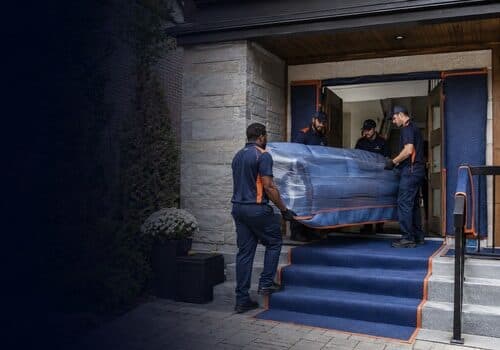
Relevant visuals break up detailed planning guidance and show how preparation, protection and access fit together.


Free moving quote
Share both addresses, the date, inventory, property types, access conditions, requested support and any special items. ProMove Ottawa will review the actual move rather than relying on a generic location rate.
About this page
Use this long-distance moving and Limoges service-location information to prepare an enquiry. Confirm current building rules, access and service availability for the two actual properties. General planning information is not a survey of a particular address or confirmation that a task has been accepted.
Page content updated September 20, 2026. About ProMove OttawaHelpful answers
Answers to scope, access, preparation and booking questions.
Coordinated relocations beyond Ottawa with clear planning and delivery steps. Households and organizations leaving Ottawa or relocating to the Ottawa region when the greater distance requires careful scheduling, inventory control and arrival planning. Ask for the requested tasks to be listed separately in the written scope. Packing, dismantling, storage stops and specialist work should not be assumed to be included merely because a moving service has been selected.
A family relocating from Ottawa to another Ontario community A household moving into Ottawa from a distant origin with a firm possession date A customer coordinating a move with an overnight gap between loading and delivery An organization transferring furniture and work materials to another region These are examples for discussing the work, not confirmation that a particular item or property can be accepted. Send the relevant inventory and access information so suitability can be assessed before a booking is agreed.
Provide both addresses, the requested date, an itemized inventory, property types and access photographs. For this service the estimate inputs include: Distance and travel time; Shipment size and vehicle space required; Origin and destination access; Packing and specialty-item preparation; Scheduling, delivery window and any storage transition. Separate confirmed facts from provisional dates or quantities; report any changes before relying on an earlier estimate.
Enquire when your likely move date and addresses are known. If possession or a building booking is provisional, say so rather than treating it as confirmed. Availability must be checked for the actual date, service and access window; an enquiry or submitted form does not reserve a crew.
Limoges access planning should confirm whether the truck will use a private driveway, an approved curb position or a smaller shuttle. Subdivision streets can become tight when residents and construction vehicles park on both sides. Photograph current signs and surface conditions, and ask the builder or property manager about temporary restrictions. The Nation's winter approach can include event-based parking bans, so customers must check active notices close to the date; a normal overnight pattern is not a guarantee during municipal operations. Rural-edge lanes need width, overhead-clearance and turnaround measurements. Keep hydrants, fire routes, sidewalks and neighbouring drives open. If unloading into a new home, protect unfinished edges and do not use unverified lawns or shoulders for truck wheels. Record pickup and destination separately, including floor, interior and exterior stairs, elevator restrictions, entrance measurements and carrying distance. Access that works at one end does not establish that the same item will fit at the other.
Confirm origin, destination and any flexibility around loading and delivery dates Create a detailed inventory with special attention to fragile and essential items Verify which belongings should travel separately with the customer Confirm destination parking, keys and building access before departure Prepare contact details and a contingency plan for timing changes Keep the preparation checklist with the confirmed inventory. Identify which tasks you will complete and which require a separately agreed service; do not disconnect, dismantle or move specialist equipment unless the responsible provider has confirmed how it should be handled.
For this service, check: Parking and entrance conditions at a less familiar destination; Building booking windows that must align with arrival; Road or driveway suitability for the planned vehicle; Potential distance between loading areas and interior rooms. Measure the narrowest point, not just the front door. Photograph stair turns, landings and the route to the final room, and identify fixed obstructions. If an item may not fit, request an access assessment before anyone attempts to move it.
No. A nearby public space is not a reserved moving bay. Confirm whether driveway, curbside or designated loading access is available at each Limoges address. Check current posted restrictions and ask the property manager or relevant authority about required arrangements. Keep a workable alternative if the intended space cannot be used.
Protection is selected for the item and the route. The planning considerations are: Suitable furniture padding prepared for extended road transport Load-securing straps arranged to limit shifting during travel Clearly labelled boxes organized by room and handling need Appropriate dollies used for loading and destination access conditions Ask what preparation is required before arrival and which materials or tasks are included. Photograph existing condition where useful; protective materials are not a substitute for confirming handling suitability or written liability terms.
Describe the rooms, item categories and quantity of packing or unpacking you need. Identify fragile, high-value and owner-packed items, and ask for materials, preparation dates and responsibilities to be confirmed in the quote. Adding packing changes the work; it should not be left as an assumption on moving day.
Keep identification, keys, medication, valuables, payment cards, essential documents and immediately needed personal items under your own control. Make a separate essentials bag and clearly mark items that must not be loaded. Confirm any restricted goods with the provider; ordinary moving scope should not imply acceptance of dangerous or regulated items.
Winter conditions in Limoges can trigger municipal parking bans, so the intended curb position must be reconfirmed after the afternoon notice period described by The Nation. A cleared private driveway is the most predictable option where available. Remove snow from the full carrying route and treat ice before arrival. Spring thaw can soften subdivision edges, gravel lanes and rural shoulders; vehicles should remain on established surfaces. Summer construction may temporarily reroute access, while heat requires protection for plants, medication and electronics. Autumn fog or early ice can affect county-road travel. Customers should send new photos whenever snow, grading or builder activity changes the site after the original access review. Report access changes before arrival. A schedule should be reassessed when actual conditions make handling unsafe.
Send the changed list, dimensions or photographs before moving day and ask whether the written scope, time or price needs revision. For long-distance moving, a change can affect distance and travel time as well as handling and access. Keep the revised instruction with the original estimate so both parties work from the same information.
List every stop before requesting the estimate, including access hours, unit or receiving details and the inventory to be loaded or unloaded there. Storage arrangements, facility access and transport are separate questions. Do not assume storage is supplied or reserved unless the written scope explicitly confirms it.
Disclose the item's type, dimensions, estimated weight, condition and access at both ends. Relevant challenges include: Longer travel makes weak packing and poor load organization more consequential A destination access problem may be harder to resolve at arrival Weather, road conditions and traffic can influence timing Missing items from the inventory can affect space and scheduling assumptions The assessment may identify a need for different equipment, a specialist or an alternative route. Do not treat a service description as automatic acceptance of every item.
Packing as though the move were a short local trip Leaving destination access checks until the vehicle arrives Failing to keep documents and first-night necessities separately Planning around one exact arrival time without reasonable flexibility Resolve uncertain items before scheduling the affected task. Use photographs and written building instructions where they can answer a specific question, and keep one current version of the inventory and access notes rather than conflicting instructions across several conversations.
Walk through the agreed inventory, no-load items, access route and destination labels with the responsible contact. Point out existing damage or fragile components before handling starts. If actual conditions differ from the estimate, clarify the affected work before proceeding. Finish with a placement and remaining-items check rather than assuming an empty room means the whole scope is complete.
Provide the complete origin and destination so route suitability, availability and delivery arrangements can be assessed. This page describes a service involving Limoges; it does not establish a fixed travel time or automatic coverage of every destination. Ask for any additional stops and delivery constraints to be recorded in the same scope.
No. Submitting an enquiry asks the team to review the requested work. Wait for explicit written confirmation of the accepted service, date, access arrangements and applicable terms before treating the move as booked. If anything is still provisional, identify it clearly and agree who will resolve it.
Use the quote form or call ProMove Ottawa with the two addresses, preferred date, inventory and service requirements. Attach or describe the access information relevant to long-distance moving. Ask the team to confirm suitability and the written scope, and retain any revised estimate when your date, inventory or property arrangements change.
Continue planning